

Contracts are the backbone of doing business. Whether you’re supplying goods, providing services, leasing commercial premises, or entering a partnership, a written agreement sets out what each party expects from the other. But even carefully drafted contracts can end up in dispute. Understanding how these disputes arise — and what options are available to resolve […]

02
Sep
Sep
If you’ve heard the term “prenup” and wondered whether it’s a real thing in New Zealand, the answer is yes — it’s just called something different. Under the Property (Relationships) Act 1976, couples can enter into what’s known as a **contracting out agreement**, which lets you decide for yourselves how property will be divided if […]

31
Aug
Aug
Most people assume that if they resign from their job, they cannot later claim they were dismissed. New Zealand employment law says otherwise. Under the Employment Relations Act 2000, an employee who resigns can still bring a personal grievance for unjustified dismissal if the resignation was not truly voluntary. This is known as constructive dismissal. […]

29
Aug
Aug
Most contract disputes aren’t about whether an agreement exists — they’re about what it actually means. Two parties can sign the same document and walk away with genuinely different understandings of their obligations. When that happens, and the relationship breaks down, the question of how a court will interpret the disputed wording becomes critical. This […]

26
Aug
Aug
Drug driving law in New Zealand has changed significantly over the past year, and many drivers are unaware of how exposed they now are to prosecution. If you have been stopped, tested, or charged in relation to drug driving, understanding the process and the law that applies to your situation is the first step in […]

10
Aug
Aug
Dealing with a government department, local council or other public body can sometimes be frustrating. A decision may appear unfair, information may be withheld, correspondence may go unanswered, or an agency’s process may simply not seem right. In many of these situations, the Office of the Ombudsman provides an important avenue for independent review. What […]
07
Aug
Aug
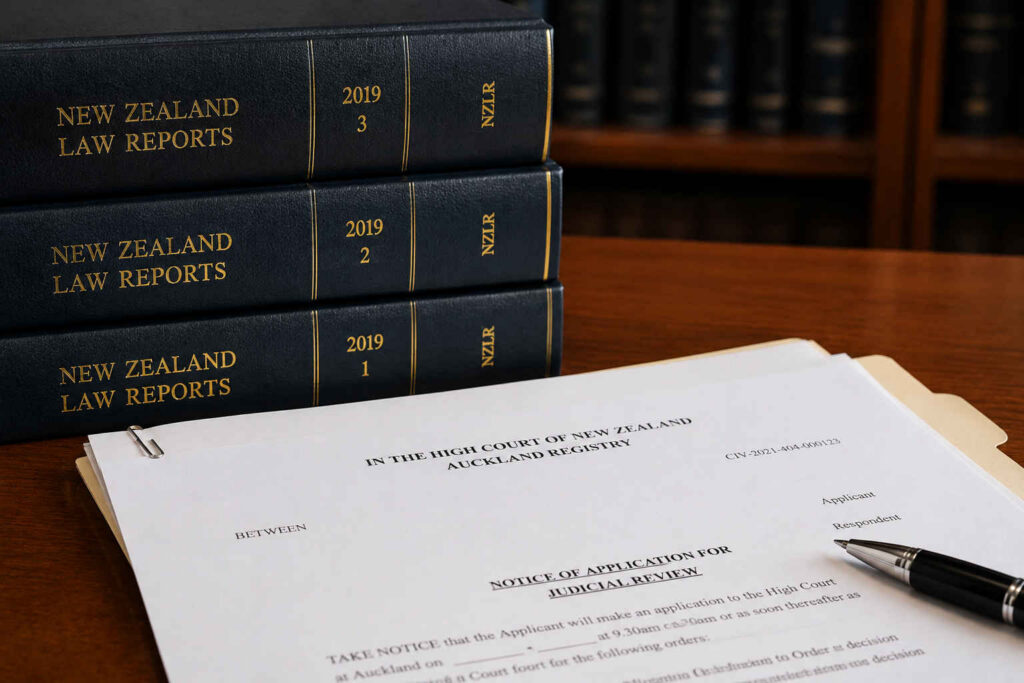
When a government agency, Minister, or statutory decision-maker gets it wrong, most people assume there’s nothing they can do about it. That’s not quite right. New Zealand’s judicial review jurisdiction gives the High Court the power to scrutinise decisions made by the Executive branch of government — and, where the decision-maker has acted outside their […]

03
Aug
Aug
Separating from a partner is difficult enough without also having to work out who gets what. In New Zealand, the division of property when a relationship ends is governed by the Property (Relationships) Act 1976. This article gives a general overview of how the Act works. Every relationship is different, and the way the Act […]

02
Aug
Aug
If you’ve been dismissed from your job in New Zealand, or you’re an employer trying to get a dismissal right, the starting point is section 103A of the Employment Relations Act 2000. It sets out what’s called the test of justification, and it applies to every dismissal in New Zealand, whether it’s for misconduct, poor […]

26
Jul
Jul
Contracts underpin almost every commercial and personal transaction — from supply agreements and leases to employment terms and service arrangements. When one party fails to do what they promised, the other party may have a claim for breach of contract. This post sets out the basics of how breach of contract claims work under New […]
- 1
- 2